
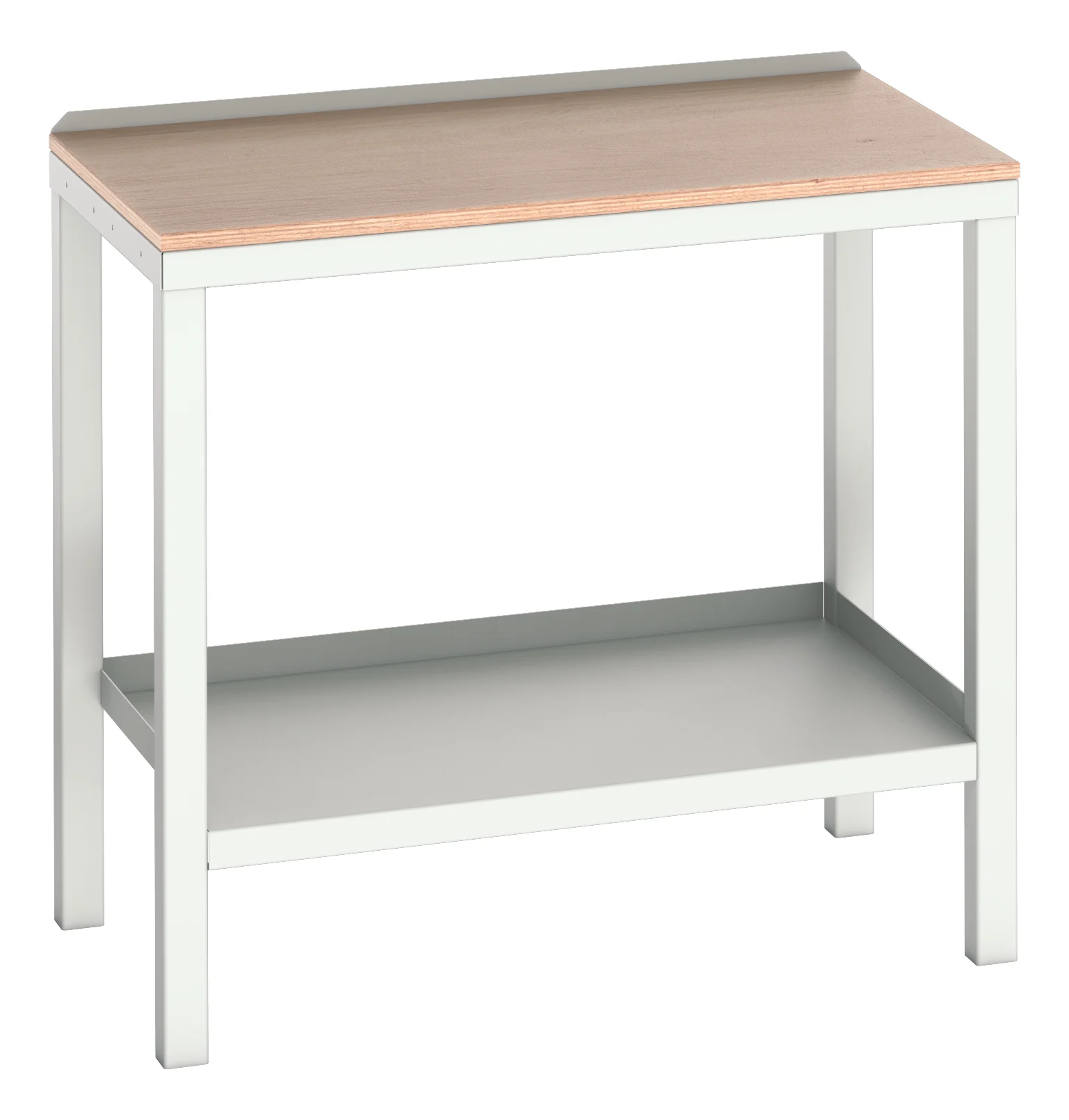
A workbench is the piece of workshop furniture that gets used every single day, so it pays to get the choice right. Buy one that is too small or too light and it becomes a frustration. Buy the right one and it will still be doing its job in twenty years. This guide walks through the decisions that matter when choosing a workshop workbench.
Start with the work, not the bench
Before looking at sizes or prices, write down what will actually happen on the bench. Assembly of small components needs a different bench from engine strip downs or fabrication. Ask yourself:
- What is the heaviest item that will sit on the bench?
- Will there be impact, such as hammering or pressing?
- Are oils, solvents or coolants involved?
- Does the user sit, stand or do both?
- Which tools need to be within reach at all times?
The answers decide the load rating, the worktop and the storage you need.
Getting the size right
Measure the space and then allow for people. As a rule of thumb, leave around a metre of clear space in front of the bench so someone can work and others can pass behind. Depth matters as much as length. A deep bench gives more room for large jobs, but anything stored at the back becomes hard to reach, which is where a back panel for tools earns its place.
If more than one person works at the bench, plan a separate zone for each rather than one long shared surface. Clear zones keep tools from wandering.
Load capacity
Manufacturers quote a uniformly distributed load, which means the weight is spread evenly across the top. A single heavy item in the middle puts more strain on a bench than the same weight spread out, so leave a comfortable margin. Remember to add up everything: the job, the vice, the tools and whatever is stored in the drawers below.
Choosing a worktop
The worktop takes the punishment, so match it to the work:
- Multiplex or hardwood ply: hard wearing, kind to components and a good all rounder for engineering and maintenance.
- Beech: a traditional solid top that copes well with impact and can be sanded back when it gets tired.
- Steel clad: resistant to oils and heat, well suited to dirty or heavy work.
- Laminate or lino: smooth and easy to wipe clean, ideal for light assembly and inspection.
- ESD tops: needed where static sensitive electronics are handled.
Storage under and above the bench
An empty space under a bench is wasted floor area. Drawer cabinets and cupboards built into the bench keep tools next to the job and remove the need for a separate cabinet. Above the bench, perforated back panels hold hand tools on hooks, and louvre panels carry bins of fixings. Together they keep the worktop clear, which is the whole point of a bench.
Static or mobile?
A static bench is the most stable choice for heavy or precise work. A mobile bench on lockable castors makes sense when the work moves, for example between vehicle bays or along a production line. Many workshops end up with both: fixed benches along the walls and one or two mobile units that go to the job.
Frequently asked questions
How high should a workbench be?
It depends on the task and the person. Fine work is usually done higher and heavy work lower. A height adjustable bench is the best answer where several people share one station.
Can I add storage to a bench later?
With a modular system, yes. Drawer units, cupboards, shelves and back panels can usually be added as needs change, which is a good reason to choose a system rather than a one off bench.
Need a hand choosing?
Browse our range in the shop, or contact our team with your sizes and the type of work you do and we will suggest a suitable setup. Buying for a business? You can also apply for a trade account.